

Why Do Queer Women Still Support Taylor Swift?
And why it’s okay that we do

Two notes from Lavender Sound editor-in-chief Max Freedman:
This post is written by Em of the wonderful publication Somewhere, Softly! I encourage paid subscriptions to Somewhere, Softly since Em is an excellent thinker and writer.
leftiejane has wisely pointed out that there is increasing evidence that Taylor Swift may have gone MAGA and may have racist leanings. Although I have no regrets about having commissioned Em’s perspective and would gladly do so again (see the comments section, where Jane, Em, and I chatted about this), I’d like anyone reading the below to then read Jane’s work here and here to get the full picture: Taylor Swift, a deeply meaningful queer icon to some, as Em writes, but Taylor Swift, problematic in the many ways that Jane details.
When somebody asks what music I enjoy, I take a deep breath before saying, “my favorite artist is Taylor Swift.”
To be queer is to be “other,” and since Taylor Swift represents the pinnacle of the mainstream, some queer people who ask me this question may feel frustrated by my love for her music. If you’re not a fan, it’s easy to resent the exposure of the billionaire blonde woman in the headlines.
There’s a lot of criticism surrounding her capitalist marketing strategies and releases of multiple variants. Swift is vocal about her commitment to keeping on making music, and on the surface, it seems this is her priority. But people naturally question her and her team’s intent when limited-edition versions keep her at the top of the charts over her peers. Others express concerns that Swift risks over-exposure and that she values quantity over quality.
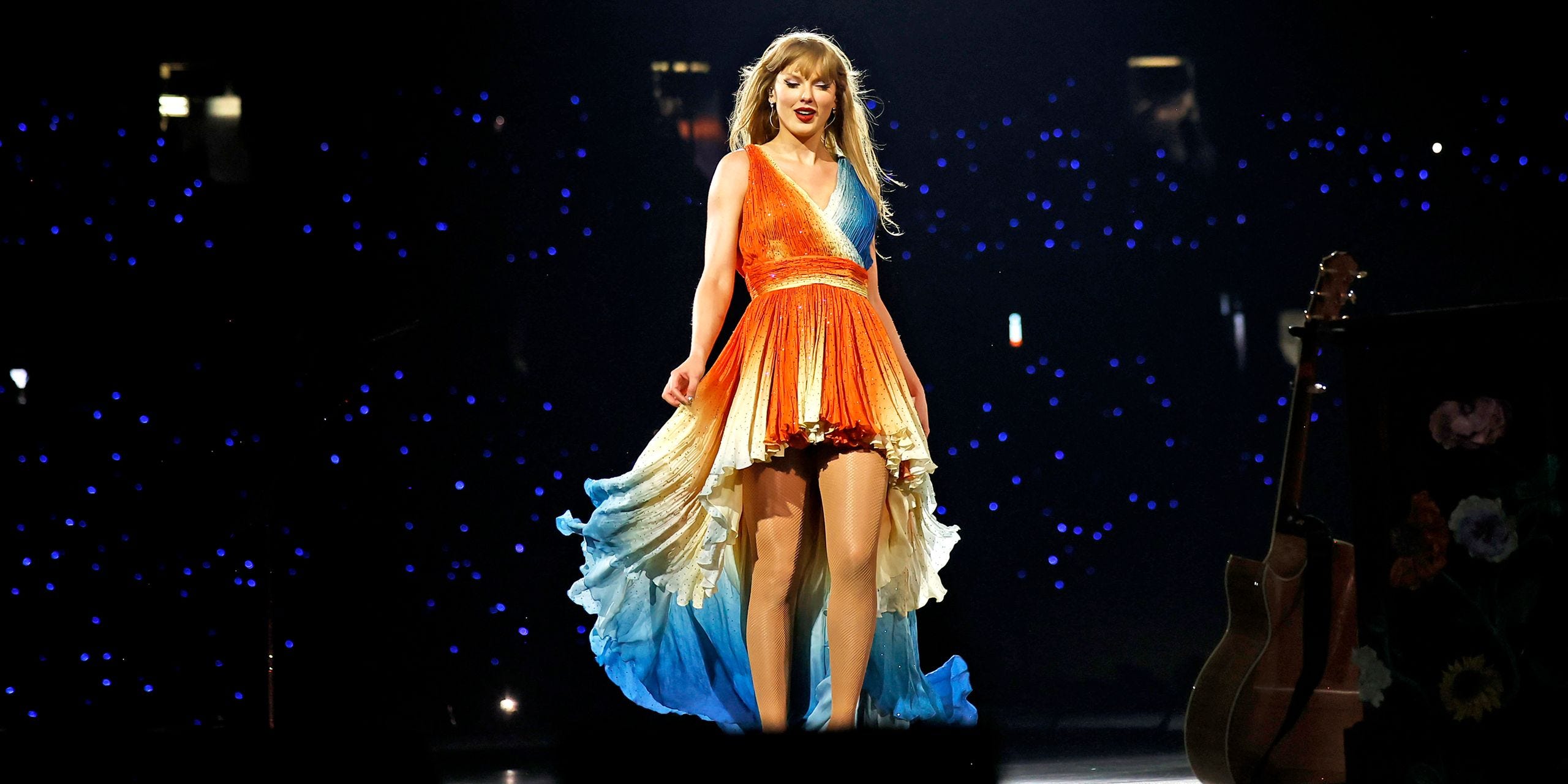
Taylor Swift is clearly not the underdog, and yet many queer people who grew up as underdogs have found pieces of home in her discography. As someone who has absorbed her music since the age of 11 and come to understand myself better through it, I’m going to be looking at some examples exploring this. Why did I, someone who considers herself a lesbian before a woman, feel like the Eras Tour was a spiritual experience? Why do I treat every new album release like a national holiday?
There’s a group of “gaylors” who attempt to argue that Swift is queer, the news of her engagement to Travis Kelce not disqualifying the possibilities of previous queer relationships. There are also those who point at the Lover era and protest that she’s a noteworthy ally. Considering that others view the era’s focus on Pride as performative, I fear both these conversations make queers more frustrated. They wonder why we’re giving Swift our attention — attention that could be focussed on our own community.
I’ve been following Swift’s career since the release of “Love Story,” which was released in the U.K. in 2009. I was hooked on its story of forbidden love, a theme that frequently reappears throughout Swift’s discography.
I spent the next couple of years listening to Swift’s songs on YouTube, and the discovery of one in particular stood out to me.
My queerness safely in a closet and something I hadn’t even tried wearing yet, I vividly remember crying to “Ours” and the lyrics: “People throw rocks at things that shine / And life makes love look hard / The stakes are high, the water’s rough / But this love is ours.”
It’s in my collection of “I should have known” moments, because although forbidden love isn’t a theme exclusive to the queer community, it’s certainly one we resonate with. I went to Britain’s iconic music store HMV, and a £10 deal got me her first three albums: the youthful country of Taylor Swift, the fairytale-esque Fearless, and the entirely self-written Speak Now.
Listening to these albums daily on my CD player, I learned that Taylor Swift understood life as an outcast. She sang on “The Outside”: “You saw me there, but never knew / That I would give it all up to be / A part of this, a part of you.”
Although I hadn’t even identified my own queerness yet, it played a core part in my detachment from girls my age. The idea that my favorite musician was also a lonely girl offered a calming sort of comfort during my hardest years in school.
The song “Breathe” featuring Colbie Caillat, with its genderless language, allowed me to feel mournful over friendships that had broken down — ones that, on reflection as a queer adult, had blurry lines, and carried feelings deeper than platonic ones. The lyrics spoke to my queerness in an unsettling way: “It’s 2 a.m., feeling like I just lost a friend / Hope you know it’s not easy, easy for me.”
I paid an excited visit to my local supermarket the day Red was released — I clutched the album like it was treasure. I consumed its long tracklist and made the music another layer of my identity. I didn’t have reviews or thinkpieces to read, and I didn’t care that liking Taylor Swift wasn’t considered cool. Just like my queerness, my music taste was something I held close to my chest, saving my thoughts for those I knew would “get it.”
Imagine my relief when I purchased 1989, and the first track, “Welcome to New York,” contained the lyric: “You can want who you want, boys and boys and girls and girls.” It’s a moment that passes by quickly in the song, but it was huge and unforgettable to my newly-out self: acceptance from my idol who I assumed to be straight, validating my wanting. Lyrics from other songs — like a “crooked love in a straight line down” (“I Wish You Would”) and “I know places we can hide” (“I Know Places”) — speak to the queer experience even more directly.
As for Reputation, queer people quickly connected with “Dress” (“I don’t want you like a best friend”) and “Dancing With Our Hands Tied,” with 2018’s concert film Taylor Swift: Reputation Stadium Tour showcasing an acoustic version that particularly highlights the secret yearning and, sadly, hiding. Lyrics include: “And darling, you had turned my bed into a sacred oasis / People started talking, putting us through our paces / I knew there was no one in the world who could take it.”
These songs are arguably more queer than what Taylor Swift intended to be a queer anthem when she later wrote “You Need To Calm Down,” which received a lot of criticism and understandable accusations of queer-baiting. It’s a different song from the Lover era, “Cruel Summer,” that transports us to a sapphic summer scene: “It’s new, the shape of your body / It’s blue, the feeling I’ve got.” Since Annie Clark — the musician best known as St. Vincent — has a songwriting credit (along with one of Taylor’s most popular collaborators, Jack Antonoff), it’s easy to believe queerness was injected into this piece, especially while screaming “I don’t want to keep secrets just to keep you” in the song’s iconic bridge.

The albums Folklore and Evermore captivated queer people during the COVID lockdowns. Many queer folks connected to these albums’ lyrical subtleties more than the previous era’s waving rainbow flags, for example on “seven”: “Then you won’t have to cry / Or hide in the closet / And just like a folk song / Our love will be passed on.” This mention of a closet catches throats, and love being passed down feels reminiscent of the famed phrase from Sappho herself: “Someone will remember us, I say, even in another time.”
Speaking of sapphic icons, many have likened Swift’s “ivy” (a personal favorite of mine) to Emily Dickinson’s queer love affair, and it was included in the Dickinson TV series. In the song “gold rush,” Taylor sings, “What must it be like to grow up that beautiful? With your hair falling into place like dominoes” as she fantasizes about being with somebody everyone wants, and importantly, not liking this feeling — it sounds like the inner turmoil of a first sapphic crush. Meanwhile, “cowboy like me” focuses on love discovered between con artists, which people have likened to the reality behind PR relationships.
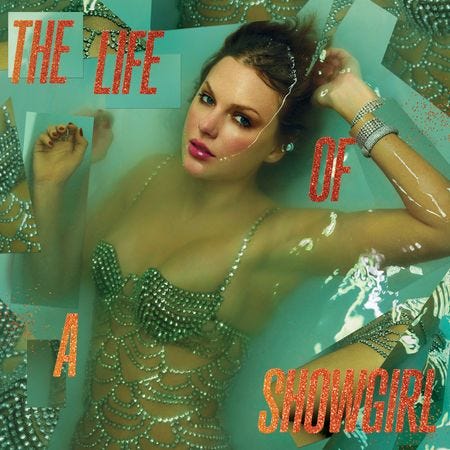
Swift’s most recent albums — Midnights, The Tortured Poets Department, and The Life of a Showgirl — don’t, to me, possess as many queer-coded stand-out lyrics. However, the Eras Tour and Taylor Swift’s “Taylor’s Version” project meant that many fans were constantly living in multiple Swift phases at once. It’s a reminder that Taylor Swift originally represented lonely teenagers, even if she’s now a global sensation dominating charts and the media.
I agree with a lot of the new album’s constructive criticism. The Life of a Showgirl didn’t lyrically blow me away the way Taylor Swift albums usually do. I still enjoy it — the songs sound like what I expect to hear on my Spotify mixes as a pop lover and ex-theater kid. Although Taylor Swift may no longer be an underdog (which is perhaps what has primarily set this album apart from her others), in many ways — standing in the shade of critics’ disappointment — her fans are left feeling like we are still underdogs, trying to defend our choices. For queer fans in particular, we feel the weight of defending our queerness in the world, and then defending our music taste in spite — or for me, in the midst — of our queerness.
Whether she intended to or not, I believe Taylor held the door open for queer girls in a way that was unique for a mainstream artist. Her writing about her own experiences made room for those of us searching for space to connect with our own confusing feelings. Taylor Swift made me feel seen, before I saw myself.
Queer girls grow up, but many of us haven’t shaken off what helped us do so. And why would we when so much of Swift’s music still makes us cry or feel joy? Even while being bombarded with well-written criticism, I don’t believe we should have to separate ourselves from our fan mentality. We’re allowed to enjoy music that makes us feel like we belong. And that feeling of belonging isn’t wrong — and neither is our queerness.
Thanks for reading Lavender Sound. We urge you to take a second to read about the fact that Israel continues to bomb Gaza after the ceasefire, and that the United Nations has said the state of Israel is committing genocide yet has greenlit a “peacekeeping” plan that further disenfranchises the Palestinian people.
 | A guest post by
|