

This EP from a Pentatonix Member is Kind of Terrible
One or two good songs though

ALBUM RATING: REALLY NOT GREAT
You know how Alex Warren’s “Ordinary” has been on a tear at the Billboard Top 100 but you probably can’t find anyone who actually likes it? To me, that’s the Pentatonix effect.
I somewhat understand seeing an a capella performance in person, in a setting where an audience can share in the joy of its novelty value, of the technically dazzling ability for people to transform their voices into enough instrumentation to resemble a full band.
When the room-filling scope of Pentatonix’s music is compressed into recordings, though, the whole project just becomes unbearably grating.
That said, Pentatonix member Mitch Grassi showed some promise outside the group with his 2021 debut EP as Messer and, before that, as half of Superfruit, his fun but sleazy funk-synthpop project with fellow queer Pentatonix member Scott Hoying. (Superfruit is a hilarious name for a queer duo, by the way. Credit where it’s due.)
Roses sounded like if M83 were a bit more irreverent or if Coldplay went full dance-pop. It was way better than anything Pentatonix has ever done and a good deal better than Superfruit’s one album, 2017’s Future Friends.
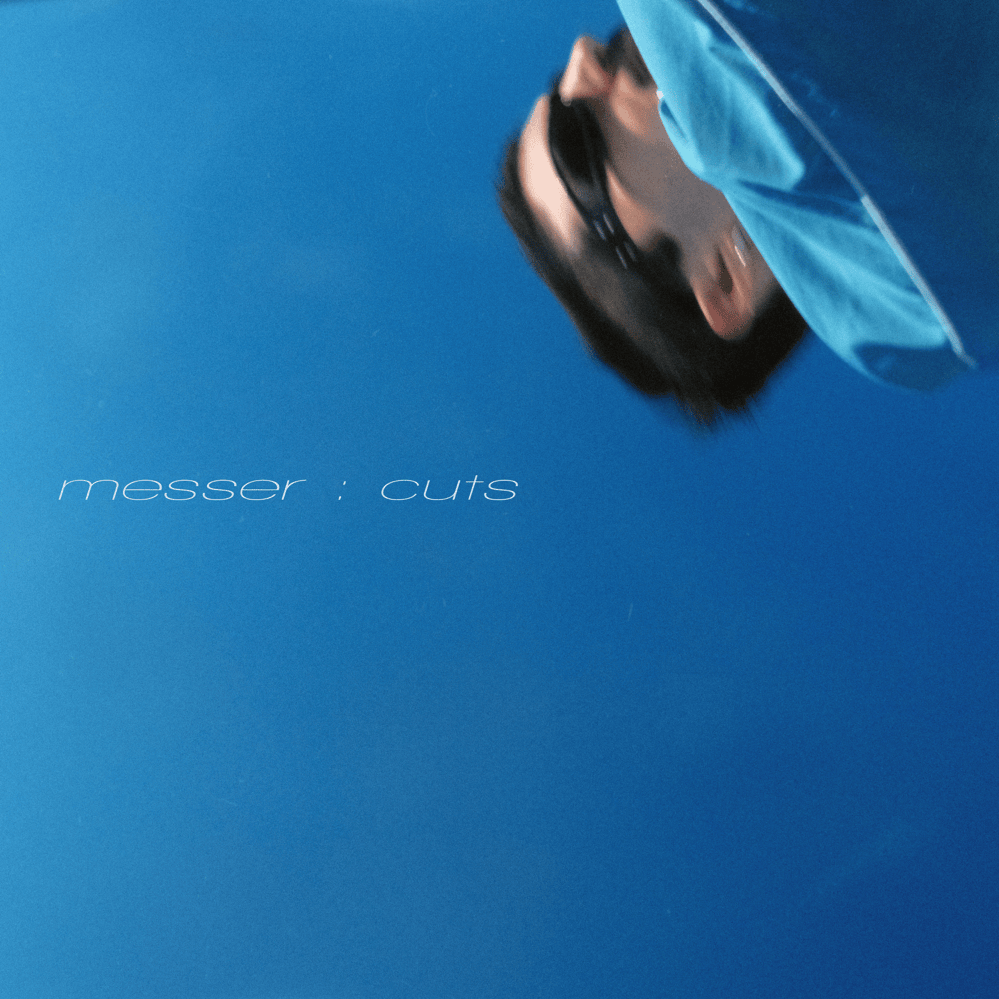
Messer’s second EP, though, only narrowly avoids being a complete disaster.
Cuts, released in July of this year, lacks Roses’ verve. It’s also void of Roses’ ebullience, which allowed Grassi to get away with undercooked, saccharine lyrics. Instead, a melancholy pallor floats over Cuts, on which Grassi’s lyrics are near-completely uninspired, the music is danceable but too wistful to let loose to, and we learn all but nothing about the artist.
On Roses’ best track, “Boy in the Pictures,” Grassi wasn’t nearly the poet laureate of electropop, but lyrics like “Put on your makeup, mon amour / And your Kawasaki / We'll go down with thunder in our hearts” matched the vaguely industrial music’s sense of forward momentum, and Grassi’s well-rounded voice soared gently over the mix.
Compare this to Cuts’ “Human,” with lifelessly stuttering electronics and lyrics that reach for profundity but land directly in the mud: “I clench my hands into fists / Is this what it’s like to exist? / It hurts so much.”
Grassi mostly hangs around in his thin upper register as he sings this, a strange choice for someone in an a capella group, in which vocal versatility and range are the whole point. He sounds just as flimsy during the chorus, though admittedly, the intense Auto-Tune on his vocals during this part have a heavenly quality to them as he sings “I’m only human,” saving this track from being a complete mess.
The relief doesn’t last. On the EP’s next song, “Railway Car,” Grassi sings “only human in the end” within the first 25 seconds. Yes, the exact same motif as from the previous track. The lack of imagination is astonishing.
“Give me a reason to believe / That you can offer me protection,” he sings during the chorus of “Railway Car,” evoking corny notions of love as cowering under someone else’s shield rather than providing a fertile base for developing yourself and growing as a human. In doing so, he swings at the flowing beauty of the instrumental beneath him like it’s a piñata, splitting this track into scattered shreds that aren’t worth picking up.
Even the IDM opener “Not Yet” is a miss, and although it’s kinda hard to fuck up an Aphex Twin-inspired beat, here we are. “And your friends will ask about me / Tell them I’m just killing time / Before time can kill me first,” Grassi whimpers through excessive vocal modulation as the music briefly drops out, unintentionally centering his striving for poeticism but coming up with cliches.
Grassi is clearly pushing for the genre of “sad banger” on Cuts, and nowhere is this more apparent, and more of a failure, than on “Break Open.” “I go out dancing at night / It’s so hard to pretend,” Grassi sings during the song’s softly pulsing first verse. These lyrics and the melancholy, tense electronics instantly evoke Robyn’s “Dancing On My Own,” a song of holy proportions to all pop music fans and especially queer people.
Whereas “Dancing on My Own” is widely agreed upon to be one of the best songs ever recorded, “Break Open” is so impersonal that we’re left begging for something as visceral and heartbreaking as Robyn being in the corner, watching him kiss her.
Musically, though, “Break Open” isn’t a dumpster fire. Grassi’s vocals disappear into the warm techno explosion of the track’s last 90 seconds, and it all sounds kind of beautiful. It comes as a welcome reprieve after everything that preceded it.
Though bad, Cuts avoids being an abject failure since, on many tracks, if you tune out the vocals, you can kinda twerk to the music. Okay, maybe not twerk, but at a rave, those last 90 seconds of “Break Open,” for example, would go off.
This trait is exactly why Cuts closer “Clean (For W)” needs to be redacted from the face of the earth. You know how Lady Gaga’s Mayhem ends with two lighters-in-the-air ballads that are so corny they’re kind of unbearable? (As I said in Lavender Sound’s review of Sabrina Carpenter’s Man’s Best Friend, I’ve gone cold on those Gaga tracks despite initially praising them in Lavender Sound’s Mayhem review; you can read both reviews below.)


That’s exactly the vibe with “Clean (For W),” but whereas Mayhem is still a fantastic album because of the 12 excellent tracks preceding its two final songs (and the three songs added half a year after its release), Cuts comes nowhere close to meriting a full-on cheesy ending ballad.
The piano melody on “Clean (For W)” is overly gloomy, and Grassi sounds alternatingly like he’s holding back and reaching desperately for his falsetto but never getting there. “I’ll sing the songs that make you cry,” he promises. On Cuts, he swings for heartbreak on the dancefloor, but he gets lost in the crowd.
Thanks for reading Lavender Sound. I urge you to take a second to read about the fact that Israel continues to bomb Gaza after the ceasefire, and that the United Nations has said the state of Israel is committing genocide yet has greenlit a “peacekeeping” plan that further disenfranchises the Palestinian people.
ABOUT THE AUTHOR:
Max Freedman (all pronouns) launched Lavender Sound to write about music by and for LGBTQ+ people. They also interview artists for The Creative Independent, and they’ve previously contributed music criticism to Pitchfork, Bandcamp Daily, and Paste.